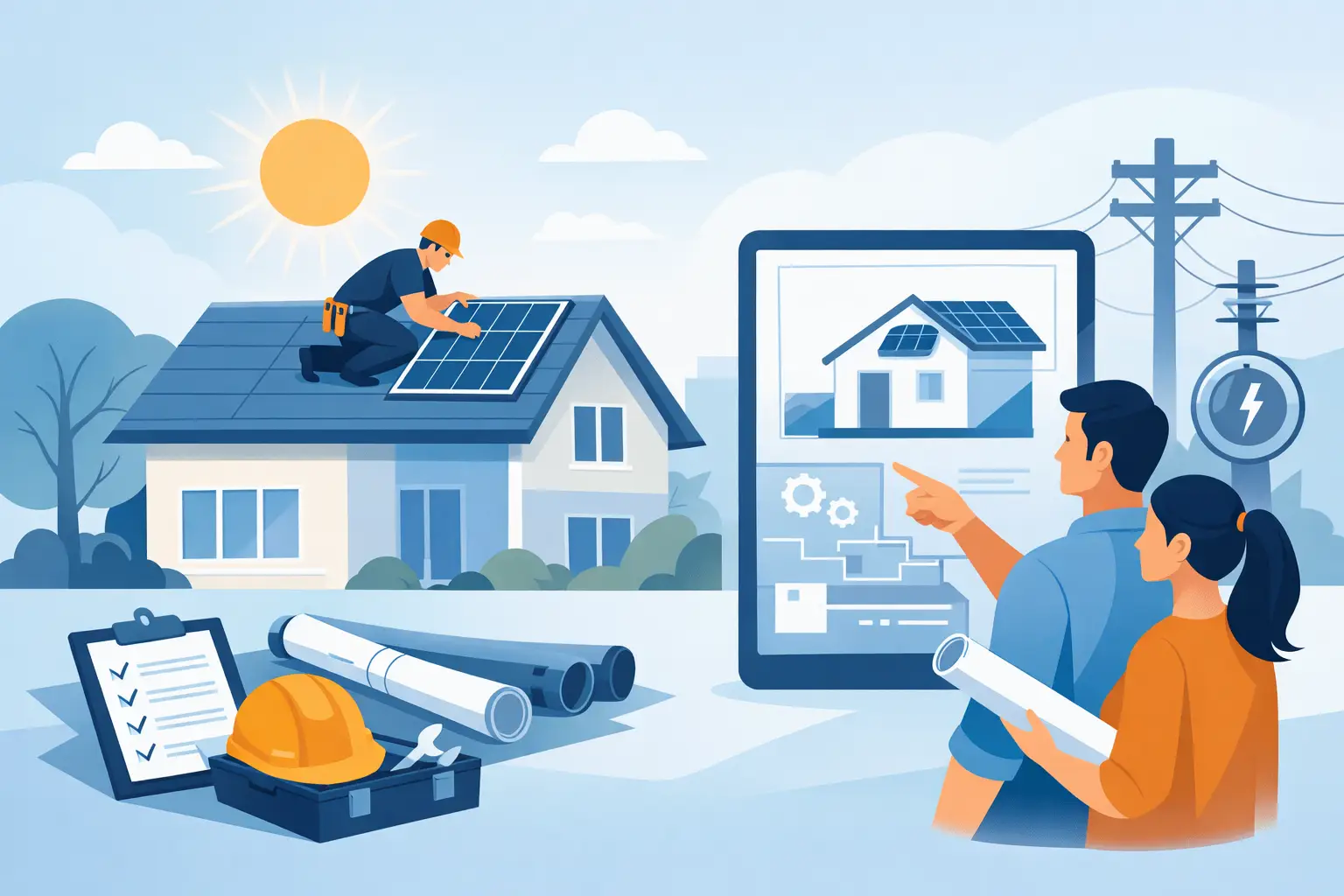
Most solar projects go more smoothly when the preparation is sorted before anyone climbs onto the roof. If you are wondering how to prepare for solar installation, the key is not doing everything yourself. It is knowing what to check, what to ask, and what your installer will need from you so the job can be planned properly from the start.
A good installer should guide you through this, but it still helps to understand what happens before installation day. That way, you can spot potential issues early, avoid delays, and feel confident that the system being fitted is right for your home rather than simply the fastest package to sell.
Preparation starts with the property itself. Solar is not just about finding space for a few panels. The roof condition, the layout of the house, the electrical supply, and your day-to-day energy use all affect what can be installed and how well it will perform.
For most homeowners, the first practical step is to think about why you want solar. Some households are focused on lowering electricity bills. Others want battery storage so they can use more of their own generation in the evening. Some are planning ahead for an electric vehicle or heat pump. These are not small differences. They shape the system design, the inverter choice, the battery size, and even whether it makes sense to leave capacity for future expansion.
If your aims are clear at the start, the advice you receive is more likely to be useful. If they are vague, there is a risk of ending up with a system that works in theory but does not fit the way your household actually uses power.
Your roof does not need to be perfect, but it does need to be suitable. Orientation and pitch matter, though not as much as people sometimes think. A south-facing roof usually gives the strongest generation, but east and west-facing roofs can also work very well, especially if your electricity use is spread across the day.
Condition matters just as much as direction. If the roof is ageing and likely to need repair in a few years, it is usually better to deal with that first rather than pay for panels to be removed and refitted later. Loose tiles, signs of water ingress, and tired felt in the loft are all worth flagging early.
Shading is another area where homeowners often make assumptions. A nearby tree, chimney stack, dormer or neighbouring property may reduce output at certain times of day. That does not automatically make solar a poor choice, but it does affect system design. A proper site assessment should look at this in detail rather than relying on broad estimates.
Panels are the visible part of a solar installation, but there is more to plan inside the house. The inverter and any battery storage need suitable locations. These should be safe, accessible, and appropriate for the equipment being installed.
In many homes, a garage, utility room or other well-ventilated internal space works well. In some cases, equipment can be installed in a loft or on an external wall, but that depends on the property and the manufacturer requirements. It is sensible to think about noise, access for maintenance, and cable routes rather than focusing only on where it will be least noticeable.
If you are adding a battery, space becomes more important. Battery units are compact compared with older systems, but they still need a proper mounting location and enough clearance around them. Your installer should explain the options in plain terms and tell you if a preferred location is practical or not.
One of the most overlooked parts of how to prepare for solar installation is the existing electrical system. Solar PV has to integrate safely with your consumer unit and the wider electrical setup in the home. If the electrics are outdated or poorly labelled, extra work may be needed before the installation can go ahead.
That does not mean every property needs an electrical upgrade. Many do not. But it is far better to identify any issues during the survey than on installation day. A qualified installer should inspect the current arrangement, assess compliance, and explain whether any remedial work is recommended or required.
If you have had previous extensions, alterations, or additional circuits fitted over the years, mention them. The same applies if you already have an EV charger, an immersion controller, or any existing renewable technology. These details help the installer design a system that works properly with what is already in place.
Most modern solar systems include monitoring so you can track generation and, where applicable, battery performance. That generally means the system will need a stable internet connection. If your broadband signal is poor in the planned equipment location, it is worth raising this in advance.
Your installer may also need access to the electricity meter and, in some cases, details about your tariff or export arrangements. If you have a smart meter, that can support better visibility of import and export, although the exact setup varies. It is a small part of the job, but having this information ready can save time later.
Solar installation is straightforward when access is straightforward. It becomes slower and more awkward when installers arrive to find restricted parking, no clear route to the consumer unit, or a loft packed floor to ceiling with stored items.
Before the work starts, make sure there is a clear path to the main working areas. That may include the loft hatch, the consumer unit, the meter position, and the proposed inverter or battery location. If furniture needs moving, it is better to do that in advance. If pets need to be kept away from work areas, plan for that too.
Outside the property, think about where the installation team will park and whether scaffold access is likely to affect neighbours. A considerate installer will discuss this with you beforehand, but giving them accurate information about access restrictions, shared drives or narrow roads helps with planning.
If you live in a terraced property or somewhere with limited external space, it is still often manageable. It just needs a bit more coordination.
In many cases, domestic solar falls within permitted development, but not every property is the same. If your home is listed, in a conservation area, or has unusual planning constraints, ask the question early rather than assuming the standard rules apply.
There are also technical permissions and notifications to consider. Grid connection requirements depend on the system size and specification. A professional installer should handle this process and advise whether approval is needed before installation or whether post-installation notification is sufficient.
You should also expect proper documentation once the job is complete. That includes certification, handover information, and the paperwork needed for warranties and any export arrangements. For homeowners, this matters not just on the day but later if you sell the property or need support.
This is one reason many people prefer dealing with a specialist installer rather than a high-volume sales operation. Clear documentation is part of a proper job, not an optional extra.
There is a balance to strike. Homeowners sometimes feel they need to research every panel brand, every inverter specification, and every projected yield figure before they can make a decision. A bit of homework is sensible. Trying to become your own installer is not.
What matters most is choosing a company that assesses the property properly, explains the options honestly, and designs around your home and energy use. In Kent, that is often where a local, hands-on approach stands out. Firms such as Baird And Brown LTD tend to build trust by being direct about what will work well, what may need attention first, and where expectations should be realistic.
There are trade-offs in nearly every project. A larger array may generate more electricity, but only if the roof space and budget support it. A battery can improve self-use, but its value depends on your consumption pattern and tariff. A visually discreet installation may involve compromises in panel layout. Good advice should cover those points openly.
By the time you agree to proceed, you should be clear on a few basics. Ask who will carry out the work, how long the installation is likely to take, whether scaffolding is included, and what disruption to expect inside the house. Check where the inverter and battery will be positioned, what monitoring is provided, and what documentation you will receive afterwards.
It is also reasonable to ask how the site will be left at the end of the job. Cleanliness, clear labelling, and a proper handover are not minor details. They are part of the standard homeowners should expect.
The best preparation is not complicated. Make sure the roof and electrics are suitable, think carefully about equipment locations, give your installer full information about the property, and ask sensible questions before work begins. A well-planned solar installation should feel organised and well explained, not rushed or unclear. If that groundwork is in place, install day is usually the easy part.
