

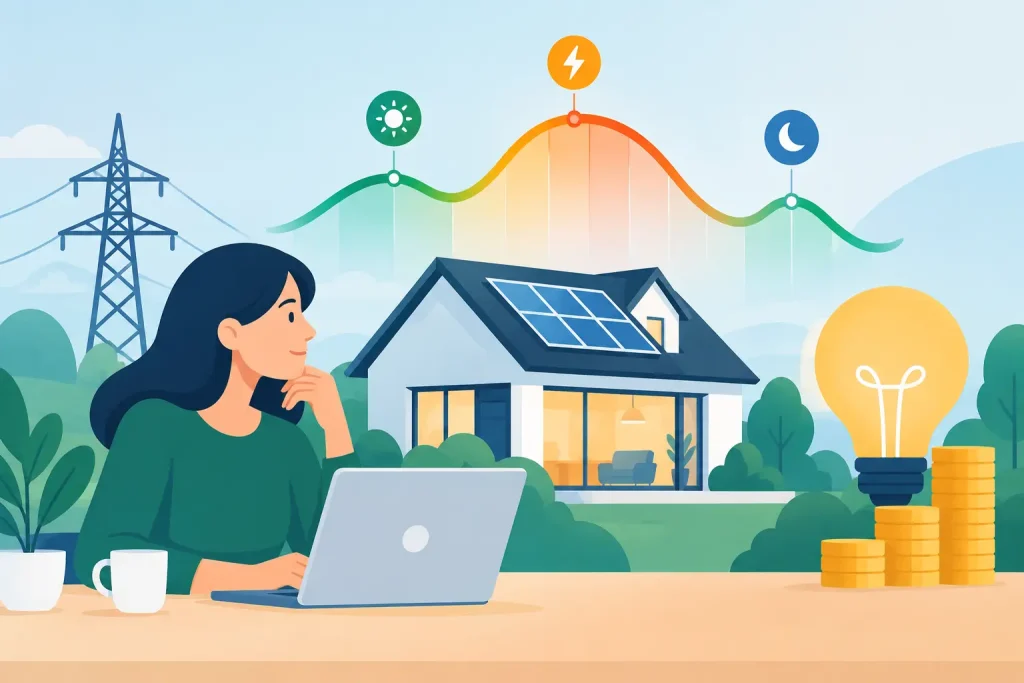
A household with solar panels, a home battery or an electric vehicle has more control over when it uses electricity than ever before. That is exactly where dynamic energy tariffs can make a real difference. Rather than paying one fixed unit rate all day, you pay a price that changes with conditions on the electricity grid.
For some Kent homeowners, this can mean charging a battery or EV when electricity is inexpensive and avoiding costly peak periods. For others, particularly homes with limited flexibility in their electricity use, the savings may be modest and the price variation may feel like an unnecessary complication. The right answer depends on your home, your equipment and how you use energy.
What are dynamic energy tariffs?
Dynamic energy tariffs are electricity plans where the unit price changes frequently, commonly every half hour. Prices are linked to wholesale electricity costs, which rise and fall according to national demand, available generation and weather conditions.
When demand is lower – often overnight, in the middle of the day, or when there is plenty of wind generation – prices can be considerably lower. When the grid is under pressure, usually on weekday evenings, prices can be higher. On rare occasions, very high renewable generation combined with low demand can even lead to extremely low or negative wholesale prices, although household customers should always check how their supplier applies these prices and charges.
A working smart meter is essential. It records half-hourly use so your supplier can bill you at the appropriate rate. Without this data, a supplier cannot accurately apply a tariff whose price changes through the day.
Why timing now matters as much as consumption
Most of us have been taught that reducing electricity use is the main route to lower bills. That remains true, but dynamic pricing adds another useful question: can some of that electricity be used at a better time?
A dishwasher scheduled overnight, a washing machine run in the early afternoon and an EV charged during a low-price period may use the same amount of power as before, but cost less. The greatest opportunity tends to be in larger flexible loads. Charging an electric car, heating water electrically or charging a home battery can involve far more electricity than switching a few lights on later.
This does not mean households need to watch an app all day. The best setups use sensible automation and clear settings. You decide your priorities first, such as having the car ready by 7am or keeping enough battery energy for the evening, then allow the system to choose lower-cost charging periods where possible.
Dynamic energy tariffs with solar and battery storage
Solar panels and battery storage can work particularly well with dynamic pricing, but they do different jobs.
Solar generation reduces the amount of electricity you need to buy during daylight hours. A battery can store surplus solar energy for later use, helping you use more of what your roof produces. With the right tariff and controls, a battery may also charge from the grid when prices are low, then supply the house when grid electricity is more expensive.
That flexibility can improve the value of a battery, especially through darker winter months when solar production is lower. However, it should not be presented as guaranteed profit. Tariff prices vary, battery capacity is finite, and every battery charge and discharge cycle involves a small energy loss. The battery should also retain enough capacity to support the household when you need it, rather than chasing every short-lived price change.
Good system design matters here. A battery that is too small may fill before the lowest-price period is over or run out before the evening peak. One that is oversized for the household’s actual use may take longer to justify. An on-site assessment should look at your electricity consumption, roof generation, existing heating arrangements, EV plans and the way your family uses the home.
Import prices and export payments are separate decisions
It is easy to focus solely on cheap electricity imports, but solar owners should also consider their export tariff. An export payment is what you receive for surplus electricity sent to the grid.
At times, exporting solar may be more valuable than storing every spare kilowatt-hour. At other times, storing solar for your own evening use will make better financial sense. Some battery systems can respond to tariff signals automatically, but the settings need to reflect both your import and export arrangements. A well-installed system gives you the capability; sensible configuration determines how effectively it is used.
Is an EV tariff better than a fully dynamic tariff?
Not necessarily. EV tariffs usually offer a predictable low-price charging window overnight. They are straightforward, which is valuable if you want to plug in the car and leave it to charge without following changing prices.
A fully dynamic tariff may offer lower prices at different times, including daytime periods when renewable electricity is plentiful. This can suit households that can shift several loads, not just EV charging. It may also be useful where a battery can respond automatically.
The trade-off is certainty. With an EV tariff, you normally know your cheaper hours in advance. With a dynamic tariff, tomorrow’s prices may not look like today’s. If most of your electricity use happens at fixed times – for example, cooking and heating during the early evening – a tariff with volatile peak pricing could increase costs unless you have solar, battery support or enough flexibility elsewhere.
The practical checks before changing tariff
Before moving to a dynamic tariff, start with your real electricity pattern rather than headline rates. Look at how much you use overnight, through the day and between roughly 4pm and 8pm. If you already have a smart meter, your supplier may provide half-hourly usage data.
Consider these practical points before making a decision:
- Check the tariff’s standing charge, price caps and how far ahead rates are published.
- Make sure your smart meter is working properly and set to half-hourly readings where required.
- Find out whether your EV charger, battery inverter or home energy management system can schedule charging automatically.
- Review whether your chosen tariff works alongside an export tariff that suits your solar system.
- Keep an eye on bills for the first few months, particularly during winter when electricity use is often higher.
It is also worth checking the terms around leaving the tariff. Some households prefer to trial dynamic pricing during a period when they can monitor it more closely, then review whether the savings and effort are worthwhile.
Where the risks lie
Dynamic pricing is not a promise that every unit of electricity will be cheap. Evening peaks can be expensive, and households that cannot move demand away from those periods may be better served by a more predictable tariff.
Care is particularly sensible for homes using electricity for space heating. Heat pumps are efficient, but the home still needs warmth when the weather is cold. A well-designed heating system, good insulation and appropriate controls are more important than trying to avoid every high-price half hour. Comfort should not be sacrificed for a small saving.
There is also a technical point to consider with batteries. Frequent cycling can increase savings opportunities, but it contributes to battery wear over time. Reputable equipment and properly considered settings help, but the aim should be sensible long-term value, not maximum cycling at any cost.
Making the tariff work without making life harder
The most successful approach is usually simple: automate the larger loads, protect the household’s normal routines and review the results. Set the EV to reach its required charge by the morning. Let the battery reserve capacity for the evening. Use timers for appliances where it is safe and convenient to do so.
For solar and battery owners, professional installation and commissioning are especially important. The electrical work, monitoring setup and battery controls need to be safe, compliant and matched to the equipment in the property. At Baird And Brown LTD, we believe homeowners should understand what their system is set up to do, rather than being left with complicated technology and vague promises.
Dynamic pricing is most useful when it supports the way you already live. If a tariff, battery and solar system can quietly move energy into cheaper periods while keeping your home comfortable and your car ready to go, that is a practical improvement worth considering.




