

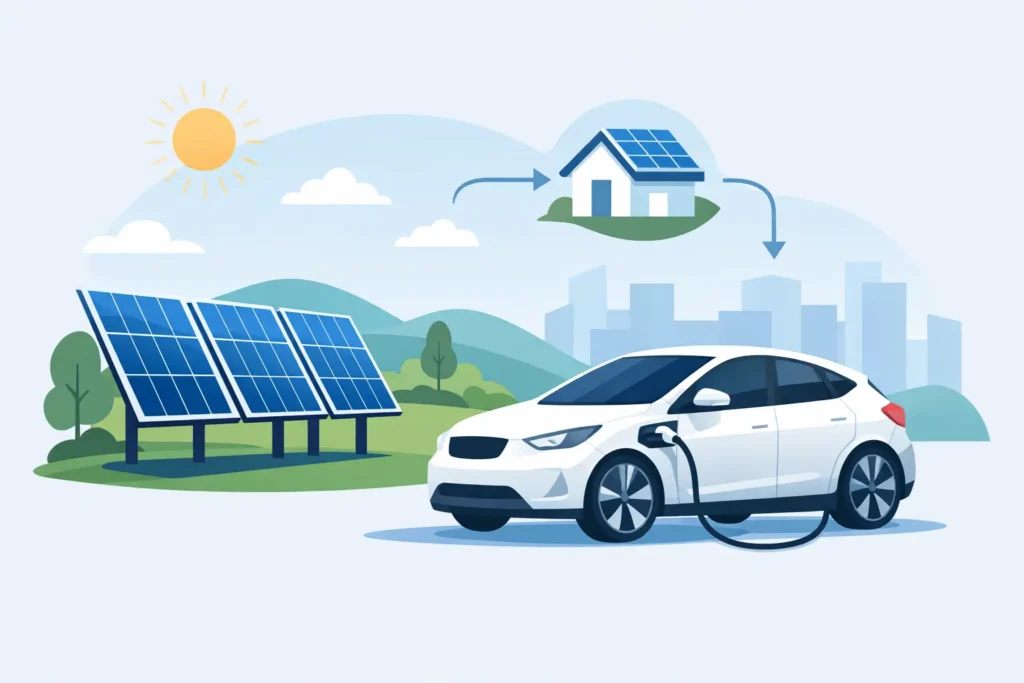
If you have started looking at home charging and solar together, the question is usually not whether the idea is attractive – it clearly is. The real question is can solar panels power an EV charger in a way that is practical, reliable and worth the investment for a UK home. In many cases, yes, they can. But the honest answer is that it depends on how much solar you generate, when you charge the car, and whether battery storage is part of the setup.
For most homeowners, the goal is not to run every mile of driving purely from sunshine every day of the year. It is to reduce grid use, make better use of your own solar generation, and bring down the long-term cost of charging. That is a much more realistic target, and it is where a well-designed system can work very well.
Can solar panels power an EV charger at home?
Yes – solar panels can power an EV charger at home, but not in a perfectly fixed or constant way. Solar generation changes throughout the day and across the seasons. Your car charger, by contrast, can draw a steady amount of power when it is in use. That difference matters.
A typical domestic EV charger in the UK is 7kW. A domestic solar PV system might be around 3.5kWp to 6kWp, although some homes go larger if roof space and budget allow. On a bright summer day, a good-sized solar system may cover a meaningful share of EV charging and sometimes most of it for part of the day. On a dull winter afternoon, it may contribute much less.
That does not mean the combination is ineffective. It simply means the charger is usually powered by a mix of solar and grid electricity unless charging is carefully timed, the charging rate is managed, or a battery is included.
How the setup works in practice
Your solar panels generate electricity during daylight hours. That electricity is used by the home first, then by other active loads such as an EV charger, and any surplus may be exported unless you have battery storage to keep it on site.
In practical terms, if your panels are producing 3kW and your EV charger is drawing 7kW, the remaining 4kW will usually come from the grid. If your charger and system support solar matching or load balancing, charging can sometimes be adjusted to make better use of available generation.
This is why system design matters more than headline figures. A household with modest daytime driving, flexible charging times and decent roof orientation may get strong value from solar-assisted charging. A household that arrives home every evening with an empty battery and wants a fast full charge overnight will still rely heavily on grid electricity, although solar can still offset general household demand during the day.
The role of smart charging
A smart charger makes a big difference. Rather than charging at full power regardless of what the house is producing, a smart system can monitor generation and household consumption and adapt charging accordingly.
Some setups allow you to prioritise surplus solar. That means the car charges when the panels are producing more than the home is using. This can be especially useful for people who work from home, have a second car parked during the day, or are happy to top up rather than fully charge in one session.
Smart charging does require the right hardware and a sensible discussion at design stage. There is no single answer that suits every property.
What size solar system do you need?
This is where expectations need to be sensible. There is no standard size that guarantees your EV charger will always run from solar alone.
As a rough guide, many EVs use around 0.25 to 0.35kWh per mile depending on the vehicle, weather and driving style. If you drive 25 miles a day, that might mean roughly 6 to 9kWh of charging per day. A typical domestic solar system can generate that amount on a good day, but not consistently in every season and not always at the exact time you need to charge.
Roof size, orientation, pitch, shading and inverter choice all affect the result. South-facing roofs generally perform best, but east and west-facing arrays can still work well, especially if charging tends to happen earlier or later in the day. A west-facing roof, for example, may suit households wanting more afternoon generation.
For many homes, the best approach is not to ask how many panels are needed to power the charger alone, but how to size the system around the whole property. Your EV, appliances, daytime occupancy and future battery storage plans all feed into that decision.
Is battery storage worth adding?
Often, yes. A battery does not create extra solar energy, but it does help you keep more of what you generate.
Without a battery, surplus daytime generation may be exported if nobody is using it. With a battery, some of that energy can be stored and used later, including for evening EV charging if your setup allows for it. That can improve self-consumption and reduce the amount of imported electricity.
There are limits, of course. Home batteries have finite capacity and power output. If your car needs a large overnight charge, a battery alone may not cover it. But for households looking to shift a portion of solar generation into the evening, battery storage can make the overall system more useful and more flexible.
It is also worth considering your tariff. In some cases, combining solar, battery storage and off-peak charging gives the best balance of savings and convenience rather than relying on solar alone.
Summer and winter are very different
One of the biggest misunderstandings is assuming annual solar generation tells the whole story. It does not.
In summer, long daylight hours and stronger sun can make solar EV charging very effective, especially if the car is at home during the day. You may cover a substantial share of your charging from your own roof over that period.
In winter, generation drops significantly. Shorter days, lower sun angles and poor weather all reduce output. At that point, your charger may still work perfectly well, but much more of the electricity will come from the grid.
That seasonal variation is normal in the UK and should be built into expectations from the outset. A good installer will explain this clearly rather than presenting best-case figures as if they apply all year round.
When solar EV charging makes the most sense
The strongest case is usually where the household already wants solar for wider energy savings and sees EV charging as part of the picture. Solar panels can support the charger, lower imported electricity across the home and improve the value of daytime generation.
It tends to work particularly well for homeowners who are at home in the day, have a battery, drive moderate daily mileage, or are happy to use scheduled and smart charging. It can also make good sense in new-build planning, where cabling routes, consumer unit arrangements and roof design can all be considered together.
If, however, your pattern is heavy mileage, frequent late-night charging and little daytime parking at home, the economics may rely more on a good off-peak EV tariff than on solar contribution alone. That does not rule out solar. It just changes the role it plays.
What to look at before installation
Before making any decisions, it helps to look at your property and your habits together. The key points are your annual electricity use, likely EV mileage, when the car is usually parked at home, available roof space, and whether battery storage is likely now or later.
You also want the electrical side checked properly. Charger location, cable runs, earthing arrangements, fuse board capacity and any load management requirements all need to be assessed on site. This is one reason homeowners often prefer working with a specialist who understands both solar PV and EV charging rather than treating them as separate jobs.
For households across Kent, that joined-up approach avoids awkward compromises later. Baird And Brown LTD focuses on that kind of practical design thinking, where the aim is a system that works properly day to day, not just one that looks good on paper.
So, can solar panels power an EV charger reliably?
Yes, but reliability does not mean complete independence from the grid. It means having a system designed around your property, your driving and your expectations.
For some homes, solar will cover a large share of EV charging over the year. For others, it will make a useful contribution while a smart tariff and battery do the rest. The best outcomes usually come from treating solar, storage and EV charging as one connected home energy system.
If you are considering it, the most useful next step is not guessing from generic figures online. It is getting proper advice based on your roof, your usage and how you actually live. That way, you can make a decision with clear numbers and no sales gloss – which is exactly how a high-value home energy investment should be approached.
