

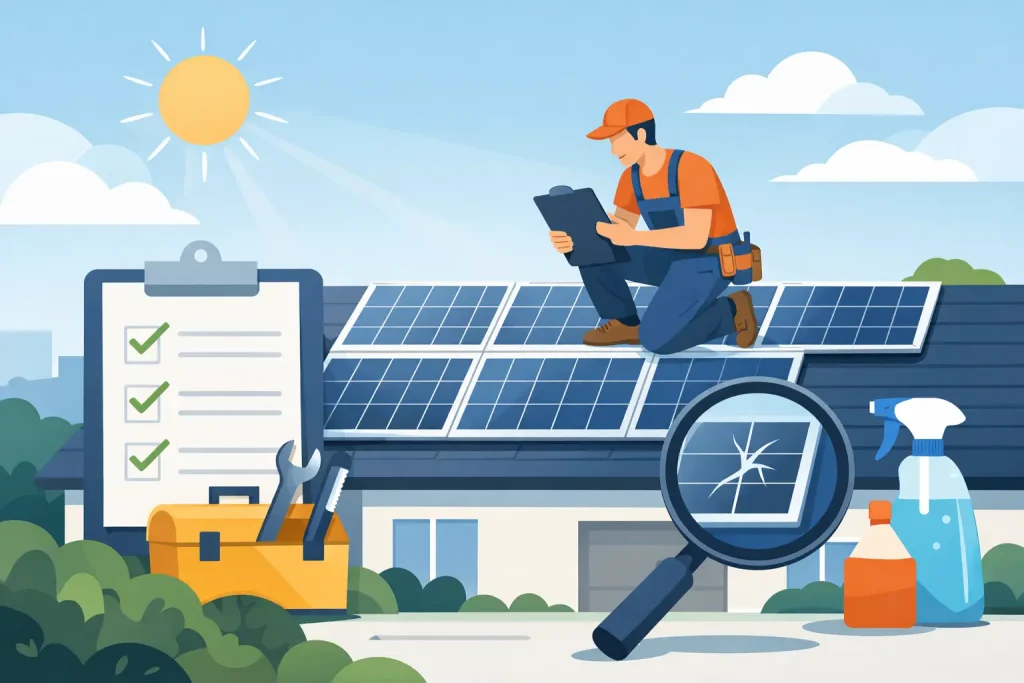
A drop in generation often shows up first on a bright day when your panels should be doing their best. If the figures look lower than expected, the cause is not always a fault. Dirt, shade, ageing components or a small issue with wiring can all affect output, which is why a sensible solar panel maintenance checklist helps homeowners spot problems early and avoid guesswork.
For most domestic systems, solar is fairly low maintenance. That is one of the reasons it appeals to so many homeowners. But low maintenance does not mean no maintenance. A quick visual check now and then, combined with the right professional inspection at the right time, can protect both performance and safety.
What a solar panel maintenance checklist should cover
A good checklist is not just about cleaning panels. It should look at the full system, including panel condition, mounting, cabling, inverter performance and any battery storage connected to the setup. The aim is simple – keep the system generating as it should, make sure nothing is deteriorating unnoticed, and avoid creating a safety risk on the roof or around the electrical equipment.
Some parts of this can be handled by the homeowner from ground level. Other parts should be left to a qualified installer. That line matters. Solar PV systems involve live electrical equipment, roof access and components that need proper testing. If something appears damaged, guessing is rarely the best option.
Start with safe visual checks
The first part of any solar panel maintenance checklist is a visual inspection you can carry out without climbing on the roof. Stand back and look for anything obvious. Panels should appear clean enough to allow light through evenly, with no visible cracks, major staining, slipped mounting rails or signs that debris has built up around the edges.
In Kent, seasonal grime is common. Pollen in spring, dust during dry spells, fallen leaves in autumn and bird fouling throughout the year can all reduce performance to some degree. A light layer of dirt may not justify immediate action, especially after a long dry period when rain is likely to help. Heavier soiling in one area is more likely to create uneven output and should be checked.
It is also worth looking at nearby trees. A branch that was not shading the roof a year ago may now cast a shadow across part of the array for several hours a day. Even partial shading can affect output more than homeowners expect, depending on the design of the system.
Keep an eye on performance data
Most modern systems give you access to generation figures through an inverter display or monitoring app. This is one of the easiest ways to spot a change before it becomes a bigger issue. You do not need to monitor it obsessively, but a regular glance at the figures is worthwhile.
What you are looking for is not day-to-day perfection. Solar output naturally changes with season, cloud cover and panel temperature. What matters is an unexpected drop compared with similar weather conditions. If your system usually performs well in bright spring weather and suddenly starts producing noticeably less, it may be time to investigate.
Inverter alerts should never be ignored. Some notifications are minor, but repeated warning messages, unusual shutdowns or long periods with no recorded generation deserve attention. The same applies if a battery is not charging or discharging in the usual pattern.
Cleaning panels – when it helps and when it does not
Cleaning is often the first thing people think of, but it is not always needed as often as you might assume. In many cases, rainfall removes a good amount of surface dirt. That said, some roofs collect more grime than others. Pitch, location, nearby traffic, tree cover and birds all make a difference.
If panels are visibly dirty and generation appears lower than expected, careful cleaning may help. The key word is careful. Abrasive tools, strong chemicals and pressure washers can damage the panel surface or seals. If access is awkward or the roof is steep, it is usually better to arrange professional help rather than take risks.
There is a trade-off here. A panel that looks slightly dusty may not lose enough output to justify the cost of specialist cleaning. A panel heavily marked by bird droppings or blocked by leaf debris is more likely to benefit. The right choice depends on the condition of the array, the accessibility of the roof and whether there is an obvious effect on performance.
Check the inverter and isolation equipment
The inverter is the working heart of the system, so it deserves attention in any solar panel maintenance checklist. It should be showing normal operation, without persistent faults, unusual noises or obvious overheating. The surrounding area should be kept clear enough for ventilation, and any labels should remain readable.
You should also look for signs of wear around isolators and visible cabling, if they are accessible from a safe location. Cracked casings, discolouration, water ingress or loose fittings need professional inspection. These are not areas for DIY repair.
If your system includes battery storage, the same principle applies. Check the app or display for normal behaviour, and make sure the unit itself shows no visible signs of damage or moisture. Batteries are reliable when properly installed, but they are electrical storage devices and should be treated with care.
Roof fixings and wiring need professional attention
Some of the most important maintenance points are the ones homeowners cannot easily inspect themselves. Mounting brackets, roof penetrations, cable routes and electrical connections all need to remain secure and weatherproof. Over time, exposure to wind, rain and temperature changes can affect fittings and seals.
This is where a periodic professional inspection is valuable. A trained installer can check whether the array is mechanically secure, whether cables are clipped correctly and whether there is any sign of wear, movement or water ingress. They can also test the electrical side of the system properly rather than relying on surface impressions.
For households in coastal parts of Kent such as Deal, Dover, Folkestone and Thanet, salt exposure can be another factor. Not every system will be affected in the same way, but coastal conditions can be harder on external components over time. That makes regular checks even more sensible.
How often should solar panels be checked?
For most domestic systems, a sensible approach is to carry out a simple homeowner check every few months and after major weather events. Strong winds, heavy rain or storms are a good prompt to look for visible changes from ground level and review system performance.
A more detailed professional inspection does not always need to happen every year, but regular servicing can be worthwhile, especially as systems age or if you notice a change in output. If your installation includes battery storage, EV charging integration or other electrical upgrades, it makes sense to treat the whole setup as part of your wider home energy system rather than as isolated pieces of equipment.
The right frequency depends on the age of the system, roof access, local environment and whether there have been any previous issues. A newer system in a clear location may need very little intervention. An older system near trees or close to the coast may benefit from more regular attention.
Signs you should call a professional
Some issues should be checked promptly rather than added to a future to-do list. These include cracked panels, loose mounting, repeated inverter errors, sudden drops in generation, exposed cabling, signs of water ingress and any burning smell or heat damage around electrical components.
It is also worth getting advice if you are planning roof work. Scaffolding, tile repairs or extensions can affect a solar installation, and panels may need to be protected or temporarily removed by someone who understands the system properly. Getting this wrong can create expensive faults that were avoidable.
For homeowners who want straightforward guidance rather than sales pressure, a local specialist such as Baird And Brown LTD can usually tell you quickly whether a system needs servicing, repair or simply a closer look at the monitoring data.
A practical checklist to revisit through the year
To keep things manageable, treat maintenance as a seasonal habit rather than a one-off task. In spring and summer, check for pollen, bird fouling and shading from new growth. In autumn, watch for leaves and debris collecting around the panels or in roof valleys. In winter, keep an eye on storm damage and generation trends during shorter daylight hours.
At any time of year, make sure your monitoring is active, your inverter is operating normally and nothing about the system looks physically out of place. That simple routine will catch most common issues before they turn into larger problems.
A well-installed solar PV system should not demand constant attention. But like any part of the home that works hard in all weathers, it benefits from sensible checks and the occasional expert eye. A little care goes a long way when the goal is reliable performance year after year.
