

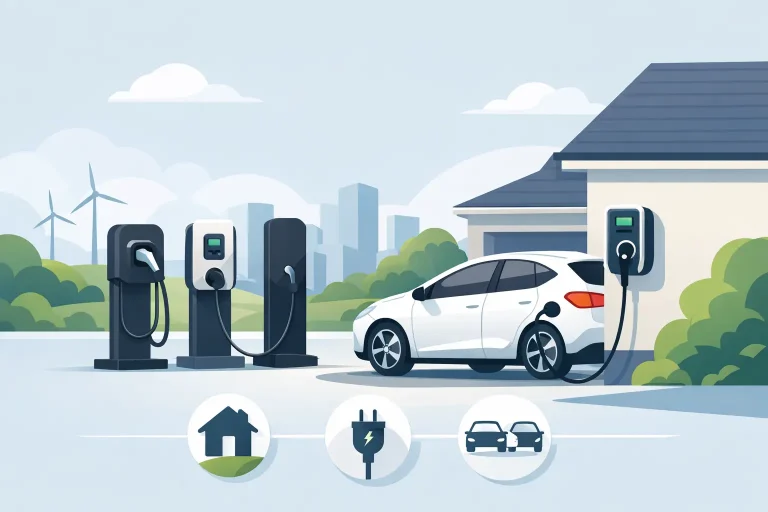
If you have just bought an electric car, the question of the best home EV charger UK homeowners should choose becomes real very quickly. It usually starts with a simple thought – do you want the cheapest box on the wall, or the charger that actually suits your car, your tariff and the way your household uses electricity?
That distinction matters more than most people expect. A charger is not just a socket with a cable attached. The right one should work safely with your property, charge reliably, make the most of off-peak electricity where possible, and still make sense in a few years if your car or energy setup changes.
What makes the best home EV charger in the UK?
There is no single charger that is right for every property. The best option depends on your incoming electrical supply, where the charger will be mounted, whether you want a tethered or untethered unit, and whether you already have solar panels or battery storage.
For most homes in Kent and across the UK, a 7kW charger is the standard choice. It offers a good balance between charging speed and compatibility with typical domestic single-phase supplies. In practical terms, that is usually enough for overnight charging, which is what most owners want. If your vehicle is parked for eight hours or more, you do not normally need anything faster at home.
The best charger is often the one that fits your routine with the least fuss. A family doing school runs, commuting and weekend mileage has different needs from a retired couple topping up a plug-in hybrid once or twice a week. The charger itself may look similar, but the right specification can be very different.
Best home EV charger UK buyers should compare first
Before looking at brands, it helps to understand the features that genuinely affect day-to-day use.
Tethered or untethered
A tethered charger has a cable attached permanently. It is convenient because you simply park and plug in. If you charge in the dark or during poor weather, that convenience becomes more noticeable.
An untethered charger has a socket only, so you use your own charging cable. Some homeowners prefer the neater appearance, and it can be useful if you change vehicles over time. The trade-off is that you need to store and handle the cable each time.
Smart charging functions
Most modern chargers now include app control, scheduling and energy monitoring. These features are worthwhile if you want to charge overnight on a cheaper tariff or keep track of household electricity use. A smart charger can also help prevent unnecessary charging during expensive peak-rate periods.
That said, not every app is equally good. Some are clear and reliable, while others are awkward to use. This is one of those areas where the cheapest charger can become frustrating over time.
Load management and safety features
A proper home charging setup should include the right protective measures and, where needed, load management. This allows the charger to respond to the rest of the household demand and helps avoid overloading your electrical supply.
This is especially relevant in homes with electric showers, heat pumps, battery storage or older consumer units. A good installer will look at the whole property rather than just fitting a charger and leaving.
The charger brands people ask about most
In the UK market, a handful of names come up again and again. That does not mean every model from every brand is ideal, but it does give a useful starting point.
Ohme is popular because it focuses strongly on smart charging and tariff integration. For households using time-of-use electricity tariffs, it can be a very practical option. If your priority is low running costs and simple scheduling, it often makes sense.
Myenergi Zappi is well known among homeowners with solar panels. Its ability to work intelligently with surplus solar generation makes it particularly attractive if you want to charge your car using more of your own electricity. It is not only for solar homes, but that is where it often stands out.
Hypervolt has built a reputation for good looks, useful features and a user-friendly app. For many homeowners, that mix of appearance and ease of use is appealing, especially where the charger is being fitted at the front or side of a visible property.
Wallbox is another recognised option, with a strong smart feature set and a compact design. It can suit households looking for a modern unit with flexible control.
The honest answer is that the best home EV charger UK customers choose is rarely decided by brand alone. It is the combination of charger, property, vehicle and installation quality that determines whether you end up happy with it.
How your home setup affects the right charger
This is where online comparisons often fall short. They tend to rank products in isolation, but chargers are installed on real homes with real electrical limitations.
If your charger is going on a detached garage with a long cable run, the installation approach may differ from one fitted next to the front drive. If your consumer unit is older, additional work may be needed. If the incoming supply is limited, load balancing or supply checks might be required.
Then there is the practical side. You want the charger positioned so the cable reaches comfortably without trailing across walkways or creating an untidy finish. You also want it installed neatly, with sensible cable routing and a result that looks like it belongs on the property.
That is why site assessment matters. A charger that is technically excellent can still be the wrong choice if it is awkward to use or expensive to install because the layout has not been thought through properly.
What if you have solar panels or battery storage?
If you already have solar, or plan to install it later, your charger choice deserves a bit more thought. Some chargers are much better at using surplus solar generation than others.
This does not always mean you must choose the most advanced or most expensive unit. It means your charger should fit the wider energy system you are building. If you intend to add battery storage later, or if you are already trying to reduce imported grid electricity, charger compatibility becomes more valuable.
For some households, this is where a charger like Zappi makes strong sense. For others, especially if off-peak tariff charging matters more than solar diversion, a different smart charger may be the better fit. It depends on whether your priority is self-consumption, running cost, or a bit of both.
Price matters, but so does the installation
People often search for the best charger and focus on the unit price first. That is understandable, but the installation is just as important.
A lower-cost charger fitted poorly is no bargain. You may end up with awkward cable runs, limited future flexibility, unreliable connectivity or an installation that looks rushed. On the other hand, a well-specified charger installed properly should give years of dependable service.
The total cost will vary depending on the complexity of the job. A straightforward installation is one thing. A property needing additional protection, supply upgrades, long cable routes or groundworks is another. This is why a proper quote based on the actual site is far more useful than a headline price pulled from an advert.
For homeowners, trust in the installer matters as much as trust in the product. You want clear advice, a tidy finish, the right certification and someone who will explain what is being fitted and why.
So which charger is best for most homeowners?
For many UK households, a 7kW smart charger from a proven brand will be the right answer. If you want strong tariff-based charging, Ohme is often worth serious consideration. If solar integration is a priority, Zappi is frequently one of the strongest choices. If design and app usability matter most, Hypervolt and Wallbox are commonly shortlisted.
But there is no honest way to name one universal winner. A charger should be chosen around your property and your priorities, not because it tops a generic list.
That is usually the difference between a sales-led recommendation and proper advice. A good installer will ask how you park, how far you drive, what tariff you use, whether solar is part of the plan, and what your existing electrics can support. Only then can they recommend something with confidence.
For homeowners in Kent, that local, practical approach tends to lead to better outcomes than chasing whichever model is currently being advertised as number one. Companies such as Baird And Brown LTD work this way because the installation has to make sense not just on paper, but on your home.
Choosing the best home EV charger in the UK without overcomplicating it
If you are deciding now, keep the process simple. Think first about your car, your mileage and where you park. Then consider whether smart tariff charging, solar compatibility or cable convenience matters most. After that, make sure the installer looks properly at the property before recommending a unit.
The best home EV charger UK homeowners end up happiest with is usually not the one with the longest feature list. It is the one that charges reliably, suits the house, keeps running costs sensible and feels easy to live with every day.
A good charger should make owning an EV feel straightforward from the moment you get home and plug in.
