

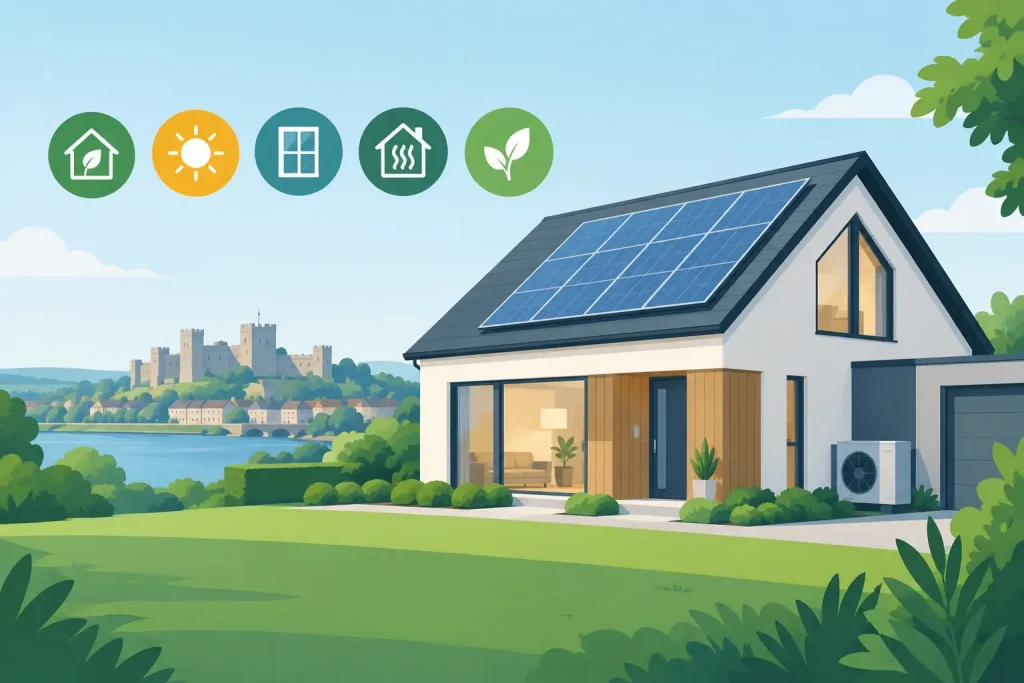
A home can have new solar panels on the roof and still waste expensive heat through draughts, poor insulation or an ageing boiler. That is why the best upgrades for energy efficient homes are rarely a single purchase. They are a sensible sequence of improvements that reduces energy demand first, then helps you generate, store and use electricity more wisely.
For homeowners in Kent, the right order depends on the age and construction of the property, how it is heated, when the household uses most power and what plans are on the horizon. An all-electric future, an electric car or a growing family can change the calculation. The aim is not to buy every available technology. It is to spend where it will make a practical difference to comfort, bills and the long-term value of your home.
Start by reducing the energy your home loses
The cheapest unit of energy is the one you never need to buy. Before looking at generation and storage, consider the fabric of the building: the roof, walls, windows, floors and gaps where warm air escapes.
Loft insulation is often one of the clearest starting points. Heat rises, and an under-insulated loft can let a surprising amount of it disappear through the roof. It is usually less disruptive than major internal works and can improve comfort quickly. If the loft is being used for storage, insulation should be installed without squashing it beneath boards, as compression reduces its effectiveness.
Wall insulation needs more care. Cavity wall insulation can suit some homes built with a suitable cavity, while solid-wall properties may need internal or external insulation. Neither should be treated as a generic job. The condition of the wall, exposure to wind and rain, existing damp issues and ventilation all matter. A poor installation can create problems that are more costly than the energy saved.
Draught-proofing around doors, windows, loft hatches and service gaps is modest work with a worthwhile effect, especially in older Kent properties. It should not mean blocking purposeful ventilation. Kitchens, bathrooms and rooms with open-flued appliances need adequate airflow. The goal is controlled ventilation rather than a stuffy house.
Upgrade heating controls before replacing equipment
A heating system cannot perform well if it heats empty rooms, runs at the wrong times or delivers more heat than the property needs. Modern controls are often an overlooked upgrade because they are less visible than a new boiler or heat pump, but they can make day-to-day heating far easier to manage.
A programmable thermostat, properly positioned room thermostat and thermostatic radiator valves give households more control over temperature and timing. Smart controls can be particularly useful where routines vary, allowing heating to be adjusted from a phone or set around occupancy. They are not magic, though. Savings depend on how the system is configured and used.
If you are considering a heat pump, improving insulation and reviewing radiator sizes should come first. Heat pumps generally work most efficiently at lower flow temperatures than traditional boilers. That may mean larger radiators in some rooms, better insulation or both. A good survey looks at heat loss room by room rather than simply swapping one heat source for another.
Solar PV: turn daylight into useful electricity
Once the home is not needlessly wasting energy, solar PV is one of the strongest long-term upgrades for many households. Panels generate electricity during daylight hours, helping to reduce the amount bought from the grid. They are especially useful where a household can use power through the day for appliances, home working, hot water controls or electric vehicle charging.
A solar system should be designed around the property, not chosen from a one-size package. Roof orientation, shading from chimneys or nearby trees, usable roof area and annual electricity use all affect the likely outcome. South-facing roofs can perform very well, but east-west arrays can also make good sense because they produce power across more of the morning and afternoon, when households may be using it.
The installation itself matters as much as the panel specification. Safe roof work, suitable mounting equipment, correct cable routing, protection devices and clear commissioning documentation are all part of a quality system. For eligible schemes and confidence in the work, homeowners should look for an MCS-certified installer and make sure the handover information is complete.
Solar is not about becoming entirely independent from the grid. Winter days are shorter and output changes with the weather. It is about producing a meaningful share of your own electricity over the year and making better use of the power your roof can generate.
Add battery storage when it fits your usage
Battery storage allows surplus solar electricity to be kept for later, rather than automatically exported. This can be useful in the evening, when solar generation has reduced but cooking, lighting and household demand often increase. Some batteries can also charge at cheaper off-peak electricity rates, subject to the tariff and the system settings.
It is a valuable upgrade for the right household, but not every solar installation needs a battery from day one. If most electricity is used while the sun is out, the additional benefit may be smaller. If the house is empty during the day and demand rises after work, a battery may improve self-consumption considerably.
Battery size should be matched to typical generation and consumption, rather than simply choosing the largest unit available. An oversized battery may spend much of the year underused. A properly designed system should also consider inverter capacity, future solar expansion, backup requirements and the local network connection. Backup power is not automatically included with every battery, and the circuits that remain live during an outage need to be agreed in the design.
Make EV charging part of the wider energy plan
For an electric vehicle owner, a home charger is more than a convenience. It provides a safer, faster and more manageable way to charge than relying on a standard socket. It can also help you use lower-cost overnight electricity or, with the right equipment and settings, make better use of surplus solar generation.
The best arrangement depends on driving habits. A household that returns home in the afternoon may benefit from solar-aware charging. Someone who needs the car ready early every morning may prioritise a scheduled overnight charge on an appropriate tariff. In either case, the charger, consumer unit capacity, earthing arrangement and cable route must be assessed properly before installation.
It is worth planning ahead. If solar, a battery and an EV charger are all likely within a few years, discussing them together can avoid repeated alterations and help ensure the electrical design has room to grow. This is particularly relevant for new-build projects, where sensible provision during construction is usually simpler than retrofitting later.
Do not overlook hot water and everyday electricity use
Small electrical improvements will not transform a poorly insulated home on their own, but they do add up. LED lighting, efficient appliances and sensible controls reduce the background demand that runs throughout the year. Replacing an old, power-hungry fridge freezer may have more impact than changing a light fitting that is only used occasionally.
Hot water is another area worth reviewing. A well-insulated hot-water cylinder can work alongside solar diverters, which send excess solar electricity to heat water once household demand and battery charging priorities have been met. This can be useful for homes with an immersion heater, although the right setup depends on the heating system, household routine and whether a battery is installed.
Monitoring is valuable here. A generation app, smart meter data or energy monitor can show when electricity is used and where the biggest opportunities sit. It is easier to make sound decisions when you can see whether the evening peak comes from cooking, electric heating, charging a car or a combination of all three.
How to prioritise the best upgrades for energy efficient homes
There is no universal order, but a practical plan usually follows the same principle: stop waste, improve control, then add generation and flexible electricity use. A homeowner with cold rooms and high gas use should normally address insulation and heating performance before focusing on a large battery. A well-insulated home with high electricity bills, daytime occupancy and a suitable roof may see solar PV move higher up the list.
Budget matters too. It is entirely reasonable to phase improvements. Start with a solar system designed so a battery can be added later, or install a charger with future solar integration in mind. The key is to avoid short-term choices that limit the next step.
A proper on-site assessment is particularly useful where several upgrades are being considered. At Baird And Brown LTD, the focus is on understanding the property, the household’s needs and the practical details before recommending an electrical or renewable energy system. Clear advice at the start helps prevent unwelcome compromises later.
The most effective energy-efficient home is not necessarily the one with the most equipment. It is the one where insulation, heating, solar, storage and charging work together in a way that suits the people living there – comfortably, safely and for years to come.




