

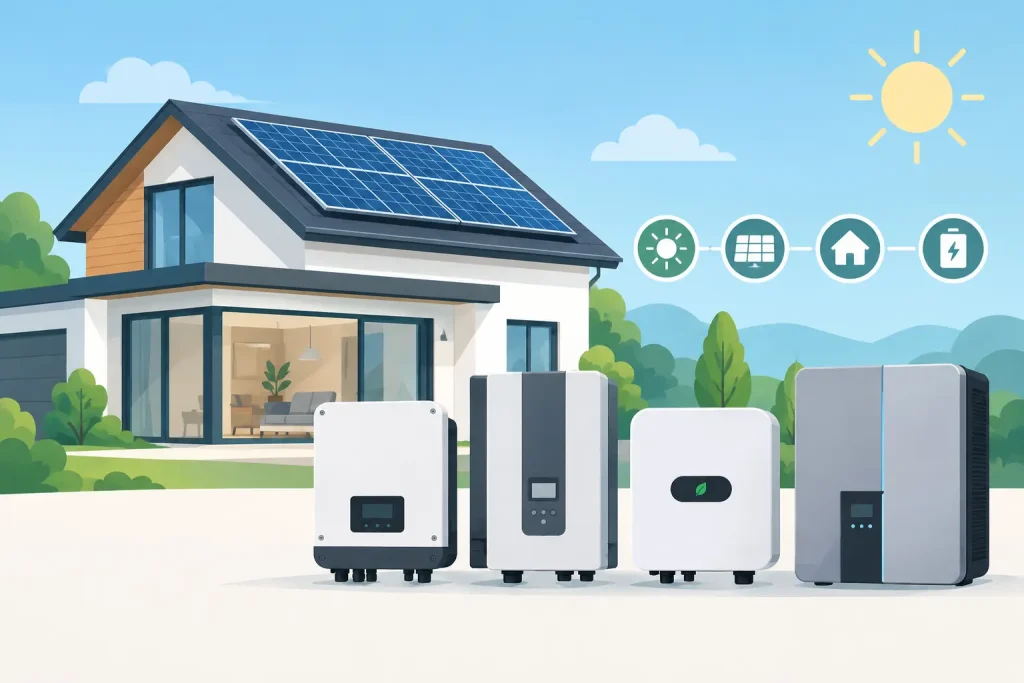
A solar panel system may look straightforward from the ground, but the solar inverter is doing much of the work behind the scenes. It converts the direct current (DC) electricity produced by your panels into alternating current (AC) electricity that your home can use. It also helps manage safety, monitors performance and, in many cases, controls how a battery charges and discharges.
For homeowners in Kent, choosing an inverter is not simply a matter of selecting the highest-rated model. The right option depends on the roof layout, shading, plans for battery storage, electricity use and budget. A well-designed system should fit the property and the household, rather than force the property to fit a standard package.
What solar inverters do in a home system
Solar panels generate electricity whenever there is usable daylight, not only in bright summer sunshine. That electricity arrives at the inverter as DC power. Your household appliances, lighting and sockets run on AC power, so the inverter makes the conversion safely and efficiently.
A modern inverter does more than convert power. It tracks the output from the panels, responds to changes in generation, records system data and disconnects safely if there is a fault or a power cut on the grid. Depending on the type chosen, it may also coordinate a battery, allow you to monitor energy use through an app and help divert surplus solar electricity to a compatible device.
The inverter is therefore a key part of long-term system performance. Panels may last 25 years or more, while an inverter will usually have a shorter expected service life. It is sensible to consider warranty, manufacturer support and access for future maintenance at the design stage.
The main types of solar inverters
String inverters
A string inverter is the most common choice for domestic solar PV. Panels are connected in groups, known as strings, and the combined DC output runs to one central inverter. This is normally installed in a practical, accessible location such as a garage, utility room, loft space or an external wall where appropriate.
For an uncomplicated roof with panels facing the same direction and receiving similar levels of sunlight, a string inverter is usually an efficient and cost-effective solution. It keeps the system relatively simple and makes future servicing more straightforward because the main electronics are in one place.
The trade-off is that panels on the same string work together. If one panel is affected by shade from a chimney, tree or neighbouring building, the output of the whole string can be reduced. Good design can often manage this by separating panels across different roof aspects or using optimisers where they offer a genuine benefit.
Hybrid inverters
A hybrid inverter combines solar generation and battery management in one unit. It can convert solar power for household use while also charging a compatible battery from surplus generation or, where it makes financial sense, from cheaper off-peak electricity.
This can be a sensible route for households that want battery storage from the outset, or are confident they will add it soon. The installation is often neater than fitting separate solar and battery inverters, and one monitoring platform can make day-to-day use easier to understand.
However, not every hybrid inverter works with every battery, and the specification needs checking carefully. Battery capacity, charging rate, backup requirements and future expansion should all be discussed before the system is selected. A hybrid inverter is not automatically the best option if battery storage is only a distant possibility or if a particular battery system is preferred.
Microinverters
Microinverters are small inverters fitted beneath individual solar panels. Each panel converts its own DC power into AC power at roof level, rather than sending DC electricity to a central inverter.
They can work particularly well on complex roofs, where panels face different directions or where intermittent shading affects only part of the array. Because each panel operates independently, a shaded panel has less effect on the others. Panel-level monitoring can also make it easier to identify a performance issue.
The downside is cost. Microinverter systems generally involve more equipment and more work at roof level, so they can be more expensive than a conventional string system. They also place electronic equipment beneath the panels, which makes future access more involved if a component needs replacement. For the right roof they are a strong solution, but they are not necessary for every home.
How shading and roof design affect the choice
Shading is often discussed in broad terms, but the details matter. A small shadow passing across one panel for half an hour is very different from a chimney shading several panels for much of the afternoon. Trees also change through the year, particularly when leaves are present.
Roof orientation matters too. A south-facing array often gives the highest annual generation, but east-west systems can produce more electricity in the morning and later afternoon, when many households are using more power. This may improve self-consumption even where total annual generation is slightly lower.
During a proper site assessment, the installer should consider roof aspect, pitch, usable space, chimneys, skylights, shading and cable routes. These details help determine whether a simple string inverter, multiple maximum power point tracker inputs, optimisers or microinverters are suitable. There is no prize for fitting the most complicated equipment if a simpler design will perform well.
Solar inverters and battery storage
Battery storage changes the question from “how much solar can I generate?” to “when can I use it?”. Without a battery, surplus generation is normally exported once household demand has been met. With a battery, some of that surplus can be stored for use later in the day.
The inverter needs to be matched to the way the battery is connected. A DC-coupled battery works closely with a hybrid inverter and can be efficient in a new solar installation. An AC-coupled battery has its own inverter and can be a practical way to add storage to an existing solar PV system.
Neither arrangement is universally better. If you are installing solar and a battery together, a hybrid design is often worth considering. If you already have a working solar system, an AC-coupled battery may avoid replacing equipment that still has plenty of life left.
It is also worth being clear about backup power. Most solar systems switch off during a grid outage as a safety requirement, even if the sun is shining. Some inverter and battery combinations can provide a dedicated backup supply, but this must be designed specifically. It may power selected circuits, such as lighting, refrigeration, broadband and sockets, rather than every electrical item in the property.
What to look for beyond the headline specification
Inverter power rating matters, but it should not be viewed in isolation. The correct size depends on the panel array, expected generation profile, grid connection limits and whether battery charging is involved. Oversizing can add unnecessary cost, while undersizing may restrict useful output at peak times.
Monitoring is another practical consideration. A clear app or web portal can show generation, household consumption, battery activity and grid imports or exports. The data is useful, but only if the monitoring equipment is configured correctly and the homeowner is shown how to use it.
Ask about warranty terms, including what is covered, how long labour is included and who will support you if a fault develops. Manufacturer warranties are valuable, but local installation support matters just as much. A system should come with the relevant commissioning information, electrical certification and clear guidance on operation.
Location should be considered carefully. Inverters can make a low operating sound, particularly when generation is high, and they need suitable ventilation. A neat installation also means sensible cable routes, properly fitted isolators and equipment positioned where it can be safely inspected without making the home difficult to live in.
Choosing with the whole system in mind
The best inverter decision usually starts with your household rather than a product brochure. Consider when you use electricity, whether you work from home, whether an EV charger is part of the plan, and whether you expect to add battery storage. A household that is empty during the day may value a battery differently from one with daytime demand from home working, appliances or electric heating controls.
At Baird And Brown LTD, the focus is on assessing the property before recommending a system. That includes the roof, the consumer unit, likely cable routes and the practical details that can affect a neat, reliable installation. Honest advice sometimes means recommending a straightforward string inverter; on another property, shading or future battery plans may justify a different approach.
A solar inverter should not be the most visible part of your home energy system, but it should be one of the most carefully considered. Choose one that suits the roof you have, the electricity you use and the changes you expect to make over the years ahead.


