

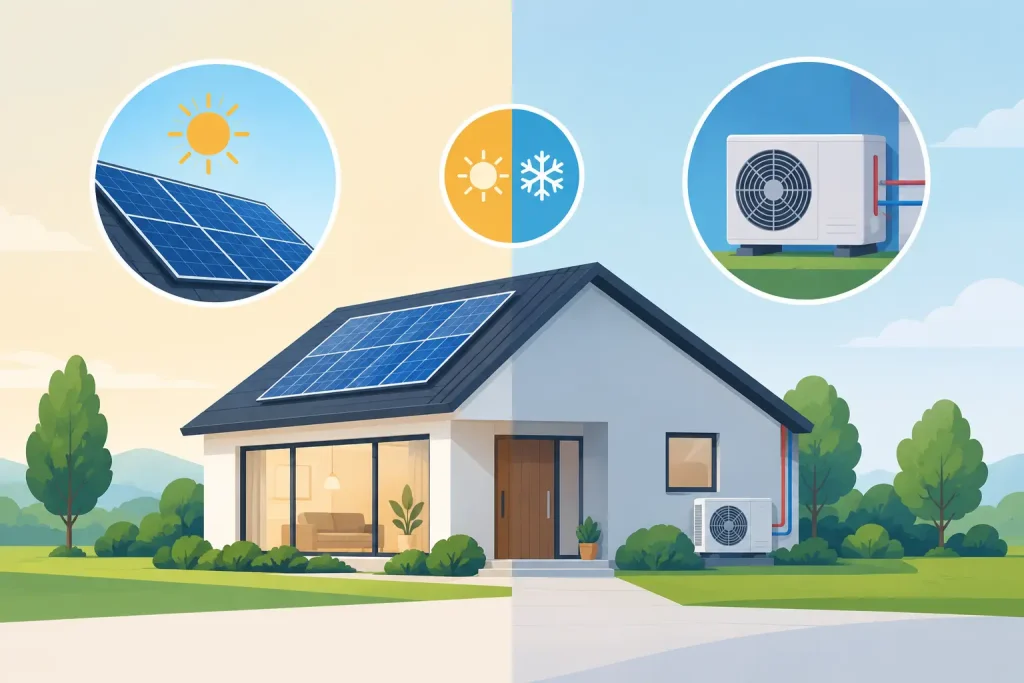
A heat pump and solar PV system can work exceptionally well together, but solar panels vs heat pumps is not quite the either-or decision it first appears to be. One generates electricity; the other uses electricity to provide heating and hot water. The right first step depends on your current heating system, the condition of your home, your roof, your energy use and the point at which you want to invest.
For many Kent homeowners, the sensible answer is to plan for both, then install in the order that solves the most immediate problem without closing off better options later.
Solar panels vs heat pumps: the key difference
Solar panels, more accurately called solar photovoltaic or solar PV panels, turn daylight into electricity. That electricity can run appliances around the home, charge a battery, power an EV charger, or be exported to the grid when you do not need it.
An air source heat pump does not generate energy. It takes low-level heat from outside air and raises it to a useful temperature for your radiators, underfloor heating and hot water cylinder. It still needs electricity to run, but a well-designed system can produce several units of heat for every unit of electricity it uses.
That distinction matters. Solar PV is primarily an electricity-bill and energy-independence upgrade. A heat pump is a heating-system replacement. Comparing their upfront cost alone misses the bigger question: what does your household need first?
When solar panels are likely to come first
Solar panels are often the more straightforward first improvement where the existing boiler is reliable and the household uses a good amount of daytime electricity. This may include people working from home, families running washing machines and dishwashers during the day, or households with an electric vehicle.
A properly surveyed solar system can reduce the electricity you buy from the grid from day one. Adding battery storage can increase the amount of generated power you use yourself, particularly in the evening. It can also allow households on suitable tariffs to store cheaper off-peak electricity for later use.
Solar may be the practical first choice if you:
- have a sound, reasonably unshaded roof with useful south, east or west-facing space
- expect to stay in the property long enough to benefit from lower running costs
- have high electricity use, an EV, or plans to add one
- want to reduce bills without replacing a working heating system immediately
- are planning a future heat pump and want to improve the home’s electrical generation first
It is not essential to have a south-facing roof. East and west-facing arrays can produce power across more of the day, which can suit households that use electricity in the morning and late afternoon. A site assessment is more useful than broad rules of thumb, particularly where chimneys, dormers, trees or neighbouring buildings create shade.
When a heat pump should take priority
If your gas, oil or LPG boiler is nearing the end of its life, heating should usually lead the conversation. Replacing a failing boiler under pressure is rarely the best moment to make major decisions, so planning ahead gives you time to understand whether a heat pump is suitable and what preparation the house needs.
Heat pumps work best in homes that can retain heat. That does not mean every property must be newly built or perfectly insulated. Many older Kent homes can be suitable, but loft insulation, draught reduction, cavity or solid-wall improvements where appropriate, and correctly sized radiators may need attention first.
The flow temperature is central to performance. Traditional boilers can send very hot water to radiators. Heat pumps generally operate more efficiently at lower temperatures, so they may need larger radiators or underfloor heating to deliver the same comfort level. A competent heat-loss calculation for each room should guide this work, rather than a simple swap based on the size of the old boiler.
A heat pump may come first when your current heating is expensive, unreliable or approaching replacement, or when you are carrying out wider renovation work. It can be particularly sensible during an extension, refurbishment or new-build project, when pipework, radiators, insulation and hot-water storage can be considered together.
Can solar PV power a heat pump?
Yes, but it is important to set realistic expectations. Solar generation is highest in spring and summer, while a heat pump’s greatest electricity demand is usually in winter. The seasons do not line up perfectly.
During sunny periods, solar PV can contribute towards the electricity used for hot water and space heating. In winter, it will still generate power, but output is lower and shorter daylight hours coincide with greater heating demand. Your heat pump will continue to rely on grid electricity, ideally bought on a tariff that suits your usage pattern.
The value of combining the two is not that solar will make winter heating free. It is that the household becomes more efficient overall. Solar can cover a meaningful share of annual electricity use, while a heat pump can reduce reliance on fossil fuel heating. Smart controls, a suitable hot-water cylinder and careful tariff choice can improve how the systems work together.
Costs: avoid a simple price comparison
Both systems are significant home investments, but the cost is shaped by very different factors.
Solar PV pricing depends on array size, roof access, panel layout, inverter choice, scaffolding, electrical work and whether you include a battery. Battery storage adds cost, but it may be worthwhile for households with evening electricity use, time-of-use tariffs or EV charging plans. It is not automatically the right answer for every property.
Heat-pump costs depend on the unit itself, installation complexity, pipework, cylinder, radiator upgrades, electrical requirements and the fabric improvements needed for efficient operation. Available grants can help eligible households, but the design still needs to stand on its own merits. A grant should not be used to justify an unsuitable system.
Running-cost comparisons also need care. A heat pump’s bills depend on its real-world efficiency, electricity tariff, thermostat settings, hot-water habits and insulation levels. Solar savings depend on how much generation you use in the home, the export rate you receive and future electricity prices. No installer can honestly promise a precise saving without understanding the property and how you use it.
Plan the electrical side before committing
Where solar PV, a battery, EV charging and a heat pump are all possible future additions, it pays to look at the property as one electrical system. The consumer unit, incoming supply, cable routes, meter arrangement and available space for equipment can all affect the final design.
A heat pump increases electrical demand, while an EV charger may do the same at certain times of day. Load management and sensible system design can prevent several high-demand appliances running at full power together. This is especially relevant in older homes where the electrical installation may need upgrading.
For solar, the installer should assess roof suitability, shading, structural considerations, inverter location and grid connection requirements. MCS certification and clear handover documentation matter too. They support compliance, future maintenance and access to relevant export arrangements.
At Baird And Brown LTD, the starting point for solar is an on-site assessment and an honest discussion about how the household uses energy – not a generic package based only on a satellite image.
A sensible order for many homes
There is no universal sequence, but a practical approach is to address heat loss and heating needs first if the boiler is failing or the home is undergoing renovation. Once the heat pump’s likely electricity demand is understood, solar can be sized with the wider household in mind.
Where heating is already dependable, solar PV can be an excellent first move. It provides immediate electricity savings, prepares the home for an EV or future electric heating, and can be expanded with battery storage where the numbers and lifestyle support it.
If you intend to install both within a few years, tell each contractor about the longer-term plan. A heat-pump installer needs to understand future electrical upgrades, and a solar installer should know whether a heat pump, EV charger or battery is on the horizon. Good planning avoids duplicated work and gives you a system that feels properly considered rather than added in stages by accident.
The best next step is not to choose the technology with the loudest sales message. Start with your home: how it loses heat, when it uses electricity, what needs replacing soon and how long you expect to live there. From that point, the right order normally becomes much clearer.




