

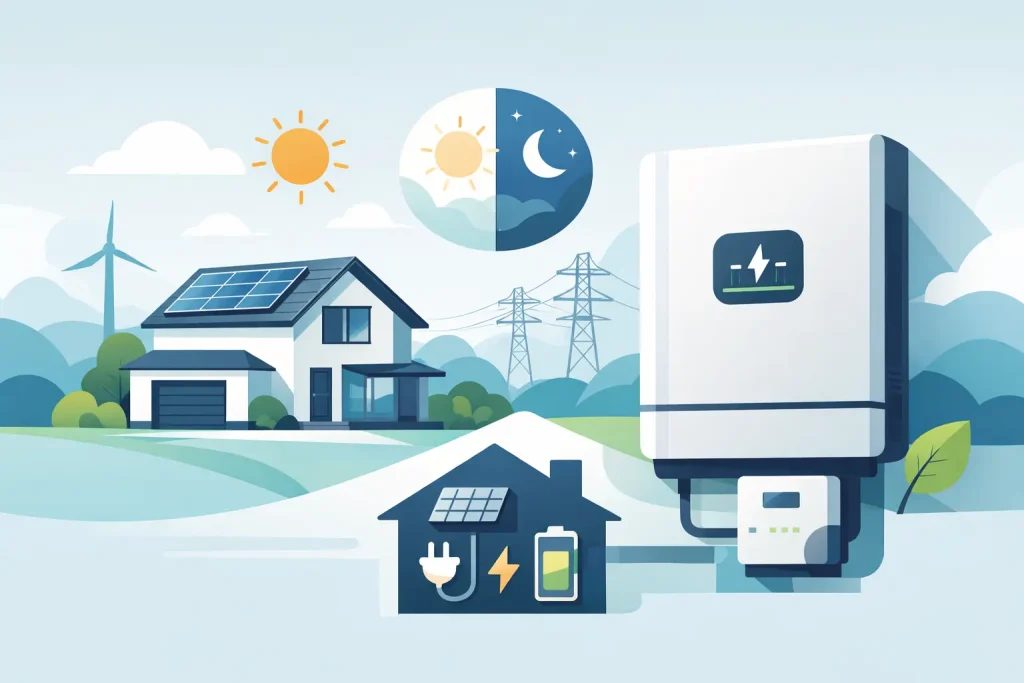
A home battery can make a noticeable difference to how you use electricity, but only when it is sized and configured around your household. A battery that is too small may fill and empty before the evening peak. One that is too large can take longer to justify, particularly if your solar generation or overnight electricity use is modest. Knowing how to choose home battery storage starts with looking at your real energy habits rather than choosing the biggest unit on a brochure.
For homeowners in Kent, the right answer often depends on the size of the solar array, the people living in the property, whether an EV is charged at home, and what you want the battery to achieve. Lower bills, greater use of solar power and backup during a power cut are related goals, but they do not always require the same system.
Start with the job you want the battery to do
Most domestic batteries are installed to store spare solar electricity generated during the day for use later in the afternoon and evening. This can reduce the amount of electricity bought from the grid, especially between 4pm and 10pm when many households use more power.
A battery can also charge from the grid at cheaper off-peak rates, then supply the home when electricity costs more. This can work well on a suitable time-of-use tariff, but it needs sensible settings and a clear understanding of the tariff rules. It is not simply a case of charging every night and expecting savings regardless of your usage.
Some homeowners place backup power at the top of their list. A standard battery installation does not automatically keep the house running during a power cut. To do that, the system needs backup capability, appropriate changeover equipment and a design that identifies which circuits will remain live. If you need to protect the fridge, broadband, lighting, heating controls or medical equipment, raise this at the survey stage.
Look at your electricity use before choosing capacity
Battery capacity is usually quoted in kilowatt-hours, or kWh. This is the amount of energy the battery can store. A 10kWh battery can theoretically supply 10kWh of electricity, although the usable amount will depend on the manufacturer’s permitted depth of discharge and system settings.
For many homes with solar panels, a battery in the region of 5kWh to 13kWh may be appropriate, but this is only a starting point. A couple in a smaller property with low evening demand may get little additional benefit from a very large battery. A family with cooking, laundry, electric heating controls and an EV may have a stronger case for more storage or an expandable system.
Your electricity bills and smart-meter data provide useful evidence. Look at total annual consumption, but also at when you use electricity. High daytime use can mean more solar power is used directly, leaving less surplus for the battery. High evening use can make storage particularly valuable. Winter consumption matters too, because solar output is lower and a battery cannot store energy that has not been generated.
Capacity is not the same as output
When considering how to choose a home battery, ask about power as well as capacity. Power is measured in kilowatts, or kW, and describes how quickly the battery can deliver electricity.
A battery with plenty of stored energy but a low output may not comfortably support several high-demand appliances at once. Kettles, ovens, induction hobs, showers and EV chargers can all create sharp demand. The system will normally draw additional power from the grid when needed, but the battery’s output affects how much of the household load it can cover at any one time.
This does not mean every home needs the highest available output. It means the design should reflect the appliances you actually use and the level of backup, if any, that you expect.
Check how it will work with your solar system
The best route depends partly on whether you already have solar PV. New solar and battery installations are often designed together, allowing the equipment to be selected as one system. Existing solar can usually have a battery added, but the most suitable approach needs to be assessed.
An AC-coupled battery connects on the AC side of the home electrical system. This is often a practical choice for retrofitting battery storage to an existing solar installation. A DC-coupled battery works more directly with solar generation and is commonly considered where a new hybrid inverter system is being installed.
Neither option is automatically better in every property. Existing equipment, available space, inverter condition, cable routes and future expansion all influence the decision. An experienced installer should check the current system rather than recommending a battery solely from a remote estimate.
It is also worth considering the age and performance of an existing solar inverter. If it is nearing the end of its expected service life, replacing it with a suitable hybrid inverter may be more sensible than adding separate equipment now and facing another change later.
Think ahead to EV charging and heat pumps
Home energy demand rarely stays still. An EV, heat pump, electric shower, extension or growing family can change the picture quickly. If you are planning to charge an EV at home, a battery may help manage some household demand, but it is rarely economical to size it simply to charge the car from stored energy each day. EV batteries are much larger than domestic batteries, so smart charging on an off-peak tariff is often the more practical solution.
A heat pump can also increase electricity consumption, especially in colder months when solar generation is lowest. Battery storage can still support solar self-consumption and tariff management, but expectations should be realistic. It is not a substitute for enough generation capacity or an efficient heating system.
Choosing an expandable battery can be worthwhile where future demand is uncertain. Check the maximum expansion capacity, whether additional modules must be added within a certain period, and whether later upgrades require matching hardware.
Compare warranty, safety and installation standards
Battery warranties often quote a number of years, commonly 10, but the detail matters. Look at the guaranteed retained capacity at the end of the warranty, the permitted number of charge cycles, any throughput limit and the conditions for registering and maintaining the warranty. A longer headline warranty is not always the better value if the terms are restrictive.
The battery chemistry, enclosure and installation location are equally important. Modern domestic systems are designed with multiple safety protections, but they still need careful positioning. The installer should consider ventilation, access, fire safety guidance, manufacturer clearances, cable routes and the effect of temperature. A garage, utility area or suitable external location may work well, but every property is different.
Ask who will carry out the electrical work, what testing will be completed and what documentation you will receive. For solar-linked installations, MCS certification and clear handover information provide reassurance that the system has been properly designed and recorded. You should understand how to monitor the battery, what happens if there is a fault, and who to contact after installation.
Do not judge value by the battery price alone
A lower quotation can look attractive until you compare what is included. Battery capacity, inverter type, backup provision, monitoring hardware, consumer-unit work, scaffolding where required, commissioning and certification can all affect the final scope.
A good quotation explains the proposed equipment and the assumptions behind the design. It should not promise precise savings without considering your usage, solar generation and tariff. Electricity prices and export rates can change, and weather varies from year to year. The honest question is whether the system is appropriate for your home and likely to deliver worthwhile value over its lifetime.
For a local installation, an on-site survey is particularly valuable. It allows the installer to inspect the property, discuss where equipment will sit, identify practical issues early and answer questions without pressure. Baird And Brown LTD takes this approach because a well-designed system begins with the home, not a standard package.
A sensible final check before you proceed
Before accepting a proposal, make sure you can explain in plain English what size battery is being installed, what it will power, whether backup is included, how it connects to your solar system and what support is available afterwards. If those answers are unclear, ask for them in writing.
The right home battery should fit quietly into everyday life: storing useful energy when it is available, reducing avoidable grid use and giving you confidence that the installation has been planned properly for the years ahead.
