

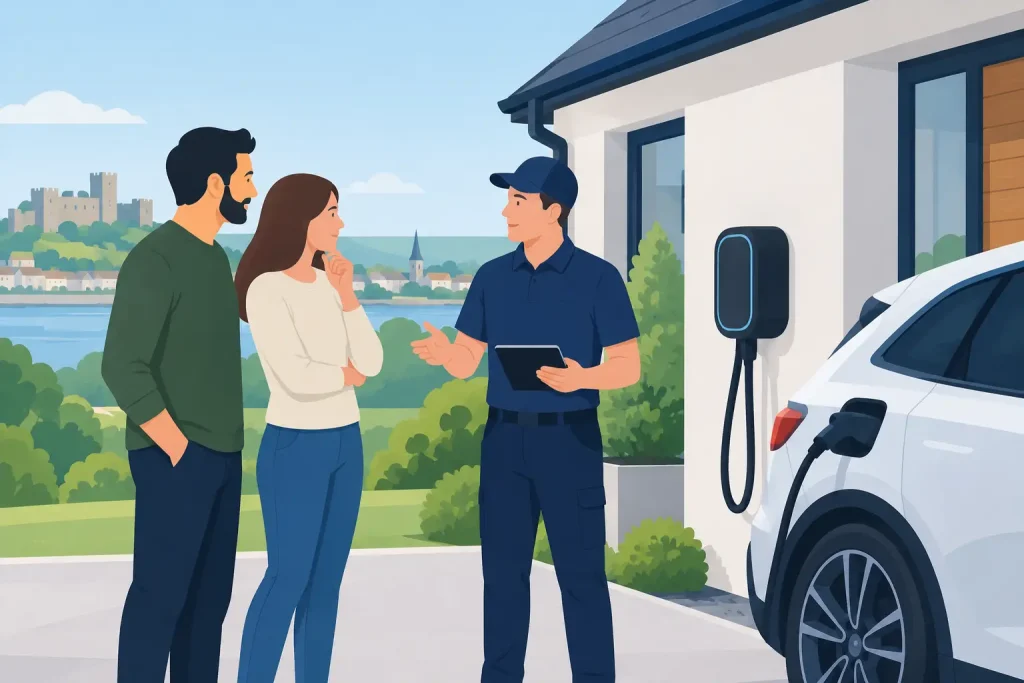
Pulling onto your drive at the end of the day and plugging in is one of the simplest benefits of owning an electric car. But that convenience depends on more than buying a charger online. The right home EV installers will assess your property properly, explain what is needed in plain English and leave you with a safe, dependable installation that suits how you actually use your car.
For homeowners in Kent, a home charger is usually a long-term addition to the property. It needs to work reliably through wet weather, busy family routines and changing electricity tariffs. Choosing an installer is therefore not simply a question of finding the lowest quote. It is about making sure the electrical work, charger choice and paperwork have all been handled correctly.
What good home EV installers do before fitting
A proper installation starts with a survey. In some homes this can be completed from photographs and clear information about the consumer unit, driveway and proposed charger position. In other cases, particularly older properties, homes with long cable runs or properties where the charger location is less straightforward, an on-site visit is the sensible option.
The installer should want to understand where the car will park, where the electricity supply enters the home and whether the route between the two is practical. They should also check the condition and capacity of the existing consumer unit, earthing arrangements and available space for protective devices. These details are not technical extras. They determine how the charger can be installed safely and how tidy the finished work will look.
A useful conversation should also cover your driving habits. A household covering modest weekly mileage may be perfectly well served by overnight charging. Someone travelling regularly for work, running more than one electric vehicle or combining charging with solar and battery storage may need a different approach. There is no benefit in paying for capacity you will not use, but equally, a charger should not become a daily frustration because it was specified too narrowly.
Choosing the right charger for your home
Most domestic EV chargers are rated at 7kW on a single-phase supply. For many households, this provides a practical overnight charge and is considerably faster than using a standard three-pin socket. Three-phase supplies can support higher charging rates, but they are not common in existing UK homes and are not automatically the best answer.
The charger itself should be chosen for more than its appearance or app. A tethered unit has a fixed lead attached, which many drivers find convenient because it is ready to use when they arrive home. An untethered unit allows you to use your own cable and can look neater when not in use. Both can be good choices. The best option often comes down to where the charger is mounted, how exposed the location is and whether more than one vehicle may use it.
Smart functionality is worth considering as well. A smart charger can schedule charging for cheaper off-peak periods where your electricity tariff offers them. This can reduce the cost of running an electric car without changing your routine. Some units can also work alongside solar generation, adjusting charging to make use of surplus power. That can be particularly attractive for homes already using solar PV, although the likely benefit depends on when the car is at home and how much daytime generation is available.
It is sensible to ask what happens if your internet connection drops, whether the charger remains usable without an app and who provides support if a setting needs changing. Technology should make charging easier, not leave you dependent on a complicated system for a basic daily task.
The electrical details that should not be overlooked
A charger draws a significant and sustained electrical load. That is why it should be installed on a dedicated circuit with the correct protection, rather than added casually to an existing circuit. Your installer should identify the appropriate route for the cabling, protect it from damage and use suitable containment where cables are visible.
Load management may be needed in some properties. This monitors overall electricity demand and can reduce the charger’s output temporarily if the home is using a lot of power elsewhere. It is a practical way to avoid overloading the supply, particularly in homes with electric showers, heat pumps, induction hobs or other high-demand equipment.
Earthing is another area where experience matters. The arrangements needed for EV charging can vary according to the property and incoming supply. A competent installer will assess this as part of the design and fit the appropriate protection. You do not need to become an electrical expert, but you should expect a clear answer if you ask how the installation will be kept safe.
Where cable routes cross paths, run along exterior walls or pass through a garage, good workmanship makes a visible difference. A neat route is not just about appearance. It helps protect the cable, makes future maintenance easier and shows that the installer has planned the work rather than simply found the quickest path.
What should be included in an EV charger quote?
Quotes can look similar at first glance while covering very different work. A clear quotation should identify the charger model, the proposed location, the approximate cable route and what electrical alterations are included. It should also state whether any extra work may be needed if the survey reveals an issue that could not reasonably be seen beforehand.
Ask whether the price includes testing, commissioning and notification of the work where required. You should receive the relevant electrical certification once the installation is complete. The charger should be demonstrated to you, including how to start and stop a charge, use any scheduling features and deal with simple issues such as resetting the unit.
Be cautious with a quote that is notably cheaper than all others but contains very little detail. It may still be legitimate, but it is worth establishing whether it includes the same cable length, protective equipment, testing and aftercare. Comparing like for like is the only fair way to judge value.
Why local experience matters in Kent
A local installer has a practical interest in getting the work right. They are more likely to understand that access, parking, driveway layouts and the age of housing stock can vary considerably between areas such as Ashford, Folkestone, Maidstone, Deal and Tunbridge Wells. More importantly, they remain accountable after the fitting is complete.
That does not mean every job requires a large local team. Often, direct contact with the person designing or managing the installation is a real advantage. It reduces the chance of a sales promise being lost between survey, scheduling and installation day. You should know who to contact if you have a question before or after the work.
At Baird And Brown LTD, EV charging work is approached as part of the wider electrical system in the home. That matters for customers considering solar panels, battery storage or future electrical upgrades, because a charger should fit sensibly with those plans rather than create unnecessary alterations later.
Preparing for installation day
Once the design is agreed, the process should be straightforward. Make sure the installer can access the consumer unit, the intended charger position and the cable route. Move vehicles where needed and mention any known issues, such as a difficult gate, shared access or concealed services in the area where equipment will be fixed.
The installation may require a short interruption to the electricity supply while work is completed and tested. A considerate installer will explain this beforehand, protect the working area and clear away packaging and offcuts at the end of the job. Before they leave, take the time to ask questions. It is much easier to understand the charger while the installer is there than when you are trying to set a schedule later that evening.
A well-chosen home charger should soon become unremarkable in the best possible way: you come home, plug in and wake up ready to go. The care taken in selecting the installer is what makes that everyday convenience dependable for years to come.




