

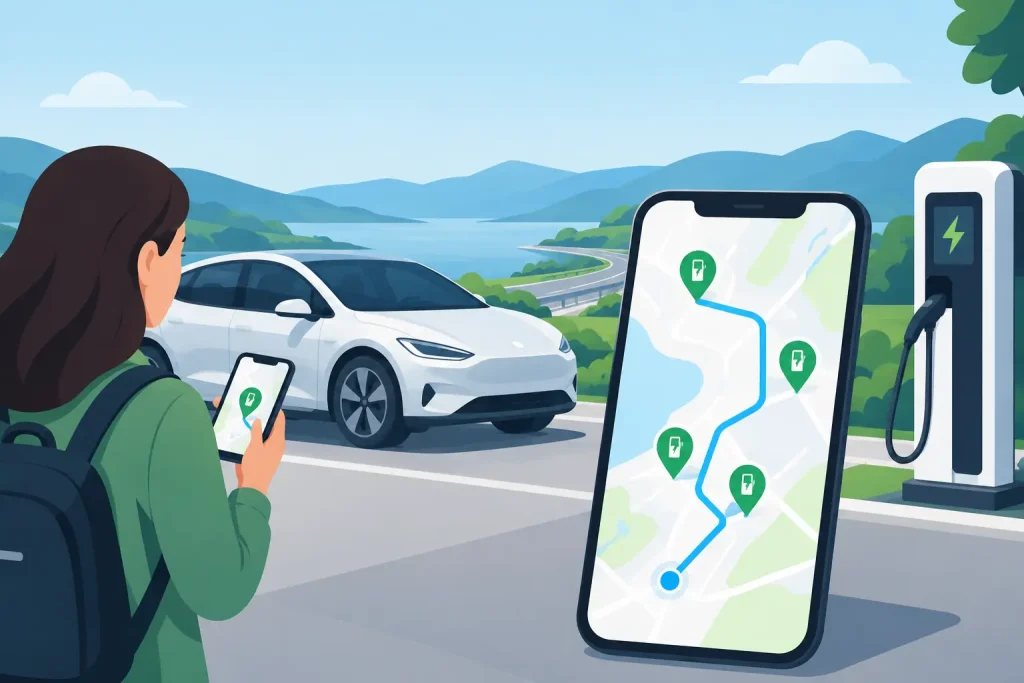
A public charge point that looks convenient on a map can be out of service, occupied, behind a car park barrier or far slower than you expected. Knowing how to locate EV charger points properly means checking more than the nearest pin before you set off – particularly when you are travelling with children, on a tight schedule or heading somewhere unfamiliar in Kent.
For most EV owners, charging becomes straightforward once there is a reliable routine. The key is to combine a sensible route plan with an understanding of charger types, access arrangements and a dependable home charging setup where possible.
How to locate EV charger points with confidence
The quickest starting point is an EV charging map or a route-planning app that shows public charge points by location. Search around your destination first, not just along the route. A charger at a supermarket, hotel, council car park or retail park may suit your plans better than one at a motorway services, where queues can be more likely at busy times.
Do not treat the map as the final answer. Open the individual charge point listing and check its recent status, connector types, maximum power, opening hours and any parking restrictions. Many apps allow drivers to report faults and leave comments, which can be more useful than a simple green availability symbol.
For a longer journey, identify a primary charging stop and one realistic alternative nearby. This is not about over-planning every mile. It is simply sensible contingency planning, especially if you are relying on a single rapid charger or travelling at weekends, during school holidays or in poor weather when your vehicle range may be lower.
Check whether the charger suits your car
Not every public charger will be compatible with every EV. Most newer battery-electric cars in the UK use a Type 2 connector for AC charging and a CCS connector for rapid DC charging. However, some older vehicles use CHAdeMO for rapid charging, while certain destination chargers may have a tethered lead or require you to bring your own cable.
Your vehicle handbook, dashboard navigation or manufacturer app should confirm the connections your car accepts and its maximum charging rate. A 150kW rapid unit may sound appealing, but if your vehicle can only accept 50kW, you will not receive the full advertised speed. Equally, a 7kW charge point is useful for several hours at a destination but is not the answer when you need to continue a long journey promptly.
It is also worth checking the charger’s power rating against the time you have available. As a broad guide, 7kW chargers are suited to homes, workplaces and longer stops. Rapid and ultra-rapid chargers are designed for quicker top-ups while travelling. Actual charging speed changes as the battery fills, and it can slow noticeably beyond around 80 per cent, depending on the vehicle and conditions.
Look beyond the charger location
A charge point may be technically available yet impractical for your journey. Before relying on it, consider the wider site.
Is it accessible 24 hours a day, or only while a shop, leisure centre or car park is open? Is there a height restriction, a barrier, a parking fee or a minimum spend? Some chargers are in hotel grounds or private developments and may be reserved for guests. Others can be difficult to reach if you are towing, driving a larger vehicle or arriving after dark.
Facilities matter too. On a 30 to 45-minute charging stop, a well-lit site with toilets, food and somewhere safe to wait is a better choice than an isolated unit at the edge of a car park. For drivers with limited mobility, look at photographs where available to assess bay width, kerb access and the position of the cable and payment screen.
In rural parts of Kent and on routes towards the coast, it is particularly sensible not to leave charging until the battery is very low. Public provision is improving, but charger density and backup options can still vary between towns and locations.
Understand payment before you arrive
Public charging networks do not all work in the same way. Some accept contactless payment directly at the unit, while others require an app, RFID card or account. Prices may be set per kilowatt-hour, per minute, by connection fee, or through a combination of these.
Before travelling, set up accounts for the networks you are most likely to use and add a payment method. This avoids trying to download an app and verify an account with limited mobile signal in a car park. Keep an eye on idle fees as well. These charges can apply when a vehicle remains connected after charging has finished, particularly at rapid chargers where bays need to be kept moving.
Price should not be the only factor. The cheapest charger can be poor value if it is slow, unreliable or takes you well out of your way. A slightly higher-priced rapid charge at a convenient, dependable site may make better sense for a journey where time matters.
Use your car’s route planner, but apply judgement
Many EVs now include route planning that calculates charging stops based on battery level, expected consumption and compatible networks. This is a useful tool, particularly because some systems can prepare the battery for rapid charging as you approach a planned stop.
Still, treat the recommendation as a starting point. Check live availability yourself where possible and consider roadworks, weather, passenger needs and the condition of your battery. Motorway driving, cold temperatures, strong winds and a heavily loaded car can all affect range.
A good approach is to leave home with enough charge for the first planned stop plus a reasonable margin. Avoid planning to arrive on single-digit battery percentage unless you know the site well and have a backup close by. Charging for a few extra minutes earlier in the journey can remove unnecessary pressure later.
Home charging changes the equation
For homeowners with off-street parking, a dedicated home EV charger is usually the most convenient and cost-effective place to charge. Rather than searching for a public point for routine driving, you can plug in when you return home and wake up with the battery ready for the next day.
A properly specified home installation should consider your vehicle, parking layout, cable route, consumer unit capacity and future needs. If you have solar PV or battery storage, the charger can also be planned around the wider energy system. The right arrangement depends on how and when you drive, as well as whether you want to make use of lower overnight electricity tariffs or surplus solar generation.
A qualified installer will assess the property rather than simply fitting the nearest available unit. That matters for safety, tidy cable routing and a charger that works well in daily use. For households across Kent, Baird And Brown LTD takes this practical, site-led approach to EV charger installations.
A simple pre-journey routine
Before a longer trip, check your starting charge, enter the full destination into your vehicle or route planner, and review the recommended charging stop. Confirm that the charger is compatible, currently operational and open when you expect to arrive. Then note one alternative nearby.
Bring any cable your vehicle requires, keep key charging apps signed in and allow a little flexibility in the schedule. You do not need to plan every journey around charging, but a few minutes of preparation can prevent an avoidable detour or delay.
The best charging plan is the one that fits your actual day: charge at home when you can, use destination charging when it is convenient, and choose rapid charging for the journeys where it genuinely saves time.


